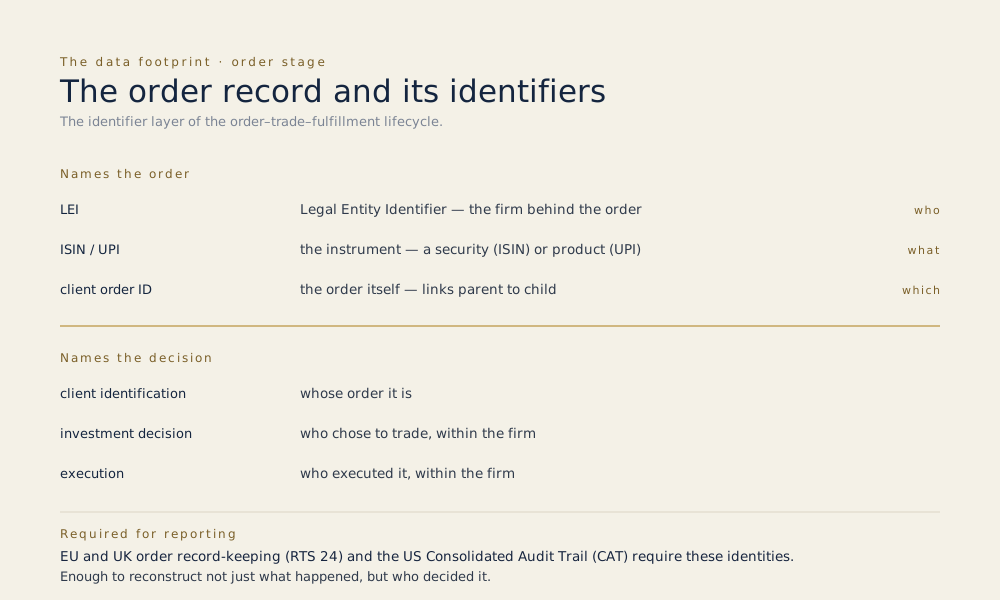
An order is only as traceable as the identifiers attached to it. The data points that open the record — side, quantity, price — describe the trade; the identifiers say whose it is, what it is, and how it connects to everything around it.
Three do most of the work. The Legal Entity Identifier (LEI) names the firm behind the order. The International Securities Identification Number (ISIN) — or, for many derivatives, the Unique Product Identifier (UPI) — names the instrument. The client order identifier names the order itself, and links a parent order to every child it splits into.
Reporting demands more. Regimes want the client, the person who made the investment decision, and the person who executed it, each tagged. These identifiers are what let a regulator reconstruct not just what happened, but who decided it.
Identity, in the end, is what makes a record legible.
For the practitioner · FIX mapping
The identifiers, and where they ride in a FIX message. Most travel in the Parties repeating group (NoPartyIDs 453) — optional in the base protocol, and made mandatory by MiFID II order record-keeping for the flows it covers.
| Identifier | FIX tag | Note |
|---|
| Names the order |
| LEI | Parties — PartyID (448), PartyIDSource (447) = LEI, PartyRole (452) | identifies the firm; the Legal Entity Identifier, ISO 17442 |
| ISIN | SecurityID (48), SecurityIDSource (22) = 4 | names the instrument |
| UPI | SecurityID (48), SecurityIDSource (22) | the Unique Product Identifier, for OTC derivatives, where the version in use supports it |
| client order identifier | ClOrdID (11) | OrigClOrdID (41) links a parent order to the child it splits into |
| Names the decision — MiFID II |
| client identification | Parties — PartyRole (452) = 3 | "client ID"; with PartyRoleQualifier (2376) for a natural person or algorithm |
| investment decision within the firm | Parties — PartyRole (452) = 122 | the investment decision maker — a person or an algorithm |
| execution within the firm | Parties — PartyRole (452) = 12 | the execution decision maker (Executing Trader) |
| CAT account (US) | Parties — PartyIDSource (447) = FDID | the firm-designated ID for Consolidated Audit Trail reporting |
Sources: FIX Trading Community, FIXimate tag dictionary; FIX MiFID II order record-keeping mapping.