
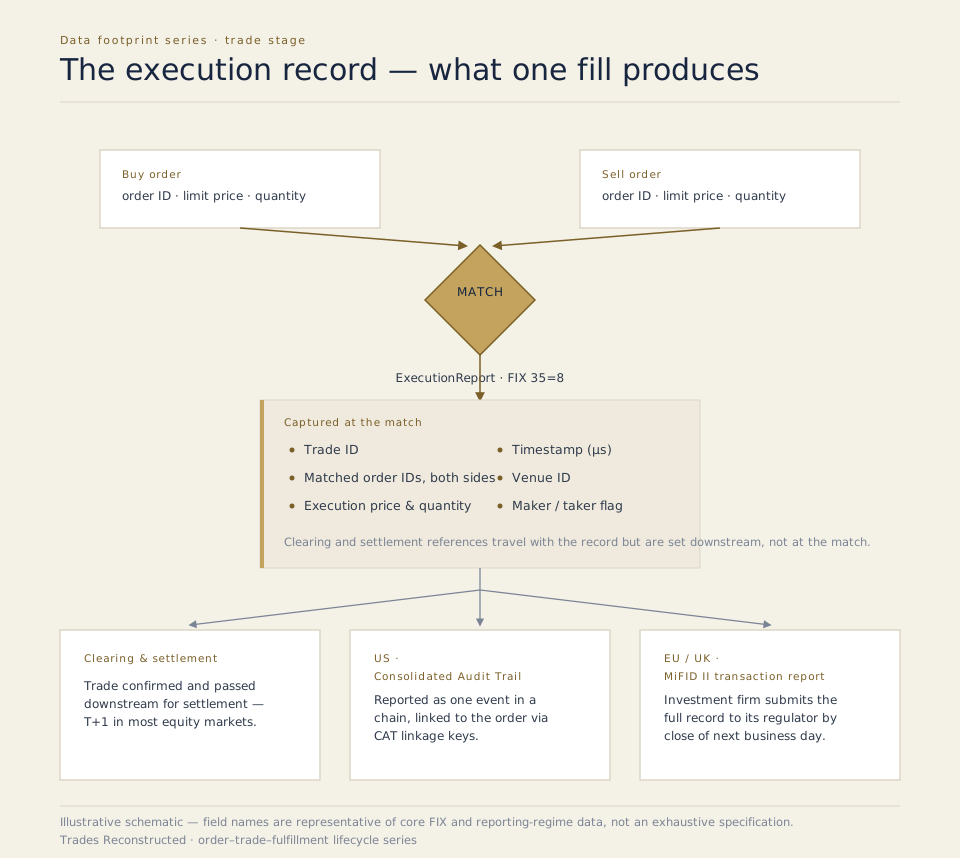
An order is intent. A trade is a fact. Between the two sits a single instant — the match — and everything a regulator will later ask a firm to prove depends on what gets written down in that instant.
At the moment of execution, a venue's matching engine writes down a compact but exacting record: a trade identifier distinct from the order, the matched order IDs on both sides, the execution price and quantity, a timestamp carried to microsecond precision, the venue identifier, and a flag for which side was passive and which was aggressive. In FIX-based markets, this is the moment the ExecutionReport message is generated — the first document in the trade's life to describe something that happened, rather than something that was requested.
None of this is useful in isolation. A reconstruction typically has to line up records from more than one venue, more than one broker, and more than one regulator's own repository — which only works if every system's clock agrees closely enough that the sequence of events is not in dispute. That is why clock synchronization is regulated in its own right: MiFID II's technical standards in the EU and UK, and the Consolidated Audit Trail's tolerance against the US atomic clock, both exist purely so a timestamp on one system can be trusted against another.
The United States and the EU/UK frame the record differently once it exists. The Consolidated Audit Trail treats execution as one event in a chain reported by different participants and stitched together through linkage keys; MiFID II's transaction reporting places the obligation on the investment firm directly — a single structured submission covering dozens of fields, due by the close of the next business day. Both are answering the same question a reconstruction eventually asks: given a trade that already happened, can every fact about it be recovered independently of what any one party now says occurred.